


Beauty Camera - Selfie Camera
Mobile_V5
I tried Beauty Camera - Selfie Camera in the way many people actually use a beauty app: not as a full photo studio, but as a quick tool passed between people at home. One person wants a cleaner profile picture, another wants a playful sticker, and someone else simply wants to see how a makeup effect looks before taking a photo. That shared-device angle matters because the app is simple enough to pick up quickly, but the results can look very different depending on how strongly you apply its effects.
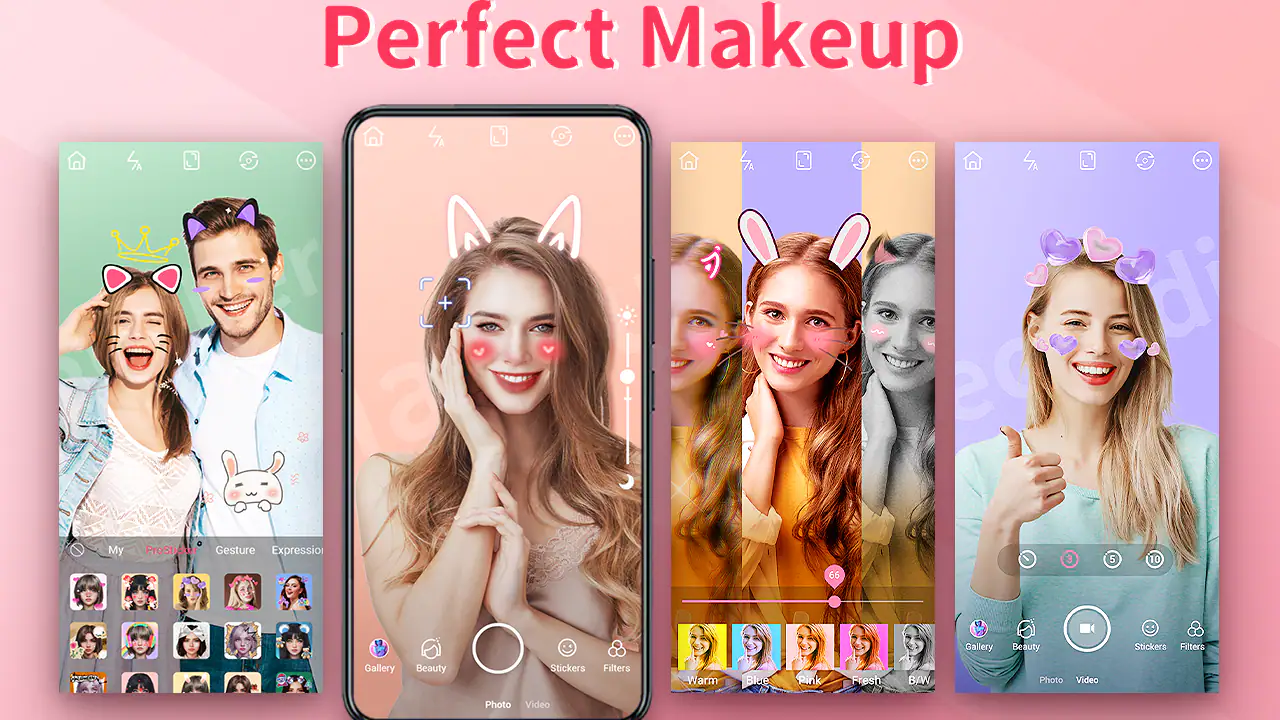
Developed by Mobile_V5, this free Beauty app focuses on selfies, filters, stickers, and makeup effects. It is available for Everyone, runs on Android 6.0 or later, and its current version is 3.2.2. The app has reached over 10 million installs and holds an average rating of 4.9 from around 34 thousand ratings, which suggests that its straightforward approach works for a large audience. I would describe it as a fast, casual camera rather than a replacement for a serious editing suite.
How it fits into a shared household routine
The most natural use case is a short, informal session. Imagine a family or group of friends preparing for a birthday, taking a group photo, or updating several social profiles from the same phone. Instead of taking a normal picture, opening a separate editor, finding a retouching tool, and then adding decoration, this app puts the selfie-oriented choices close together. That reduces the number of steps when the goal is simply to take something cheerful and shareable.
I found that the app is particularly convenient when people have different tastes. One user can prefer a light beauty adjustment, while another can choose a more noticeable filter or a sticker. Passing the phone around does not require everyone to understand advanced editing terminology. The visual nature of the tools makes the learning curve gentle: you can try an effect, look at the preview, and decide whether it suits the photo.
That convenience also exposes the app's main limitation. A shared camera can encourage people to apply effects quickly without checking how much they have changed the image. A result that looks amusing in a preview may feel artificial once saved. I recommend treating the first effect as a starting point rather than the final choice. Compare a subtle option with a stronger one, then step back and ask whether the face still looks like the person in front of the camera.
Latest News

Uber Eats Under Pressure: What Happens When Delivery Goes Wrong
How QR & Barcode Scanner Adapts to Android and iOS Innovations

Why Waze Navigation & Live Traffic Is Your Essential Travel Companion
CapCut Mastery: Unleash Hidden Features for Pro-Level Editing

How OS Updates Enhance Roblox Adventures

Teacher Simulator: Exam Time Turns Quick Classroom Judgments into a Repetitive Loop
What the main tools are good for
The beauty controls are most useful when you want a polished selfie without spending time learning manual editing. They can help create a smoother, more finished appearance, especially for a quick profile image or a casual portrait. The filter selection is better suited to changing the overall mood than correcting a specific photographic problem. If the room is dark or the subject is badly framed, a filter will not solve everything.
Stickers serve a different purpose. They make more sense for playful pictures, seasonal messages, or photos taken with children and friends than for a professional headshot. Makeup effects can be useful when you want to preview a particular style, but I would not treat the screen result as a precise guide to real cosmetics. Lighting, camera position, and the strength of the effect can alter the impression considerably.
A useful workflow is to take one neutral selfie first, then test the beauty adjustment, filter, and sticker separately. This makes it easier to understand what each tool contributes. If you apply everything at once, it becomes difficult to tell whether the improvement came from the lighting feel, the facial retouching, or the decoration. That small habit gives the app more value than simply tapping the most dramatic preset.
Gallery
Setting boundaries before passing the phone around
Because this is a camera app, I would establish a simple household rule before sharing the device: each person should review the image before it is kept or sent anywhere. The app is designed for taking and styling selfies, not for managing a household's identity or deciding who may use the phone. Those responsibilities remain with the people using the device.
On a shared phone, I would also avoid leaving an unfinished photo session open when handing the device to someone else. Even without complicated setup, a camera screen can reveal the previous user's face, preferred style, or an image that was meant to stay private. Closing the session and returning to the normal phone screen is a small but sensible habit.
The same boundary applies to stickers and makeup effects. They are harmless as creative tools when everyone understands that the image is being altered. Problems arise when one person edits another person's appearance without permission or saves a funny image that the subject does not want circulated. The app makes experimentation easy, so the social rule needs to be just as clear as the technical one.
Keeping different users coordinated
Coordination is easiest when the phone owner keeps the process predictable. I would let one person choose the camera position, have each participant select their own effect, and review the final image together before moving on. This avoids the common shared-device problem where one user changes several settings and the next person assumes the camera is still neutral.
For a group photo, I prefer taking a plain version before experimenting. That gives everyone a dependable copy and leaves room for creative versions afterward. It is also a practical way to avoid disappointment if a particular sticker covers a face or a beauty effect behaves differently when several people appear in the frame.
Another useful tip is to use the app for one purpose at a time. If the goal is a clean portrait, start with the beauty controls and keep decorations off. If the goal is a playful message, begin with the normal framing and add a sticker afterward. Separating those intentions makes the result easier to judge and helps each person get the style they actually wanted.
Age, trust, and realistic expectations
The Everyone age rating makes the app approachable for general household use, and its simple presentation should be comfortable for people who do not normally edit photos. Still, an age label does not replace supervision or conversation. Younger users may need help understanding that beauty effects are visual changes, not a standard they have to match in real life. I would present the filters as playful choices rather than corrections to a person's face.
Trust is also important when the device belongs to several people. I would not assume that every user wants their selfie adjusted, saved, or shown to others. The best shared-device routine is one where the subject chooses the effect and approves the final image. That is especially important with children, guests, or anyone who is uncomfortable with appearance-focused editing.
The app is free, which makes it easy to try without a purchase decision. That is helpful for occasional household use, but free access should not be confused with a complete photo-management solution. If you need careful organization, advanced retouching, layered editing, or a more controlled workflow for professional images, a dedicated editor will usually be the better choice. This app's strength is speed and accessibility, not deep creative control.
Where it stands beside ordinary alternatives
Compared with the standard phone camera, this app is more immediately playful. The normal camera is often better when you want a faithful record of a moment, while Beauty Camera is more useful when the look itself is part of the point. Compared with a full photo editor, it removes complexity but also gives up precision. You are choosing convenience over detailed control.
That trade-off is sensible for quick profile photos, informal portraits, and group sessions where nobody wants to spend several minutes adjusting sliders. It is less convincing for product photography, formal documents, or images where accurate skin tone and facial detail matter. A normal camera or a professional editing tool may preserve the subject more naturally in those situations.
I also would not use it as the only camera on a phone. Its purpose is narrow and clear: make selfie creation faster and more expressive. Keeping the regular camera available gives you a neutral option for landscapes, family records, low-key snapshots, and any picture where filters would distract from the scene.
Small habits that improve the results
Lighting still matters more than any preset. I get more natural results when the face is evenly lit from the front rather than partly hidden in shadow. This is a simple but important insight because strong beauty processing can look uneven when the original image has harsh contrast. Moving toward a window or a brighter room often helps more than choosing a stronger effect.
Camera distance also changes the character of the selfie. Holding the phone too close can exaggerate facial proportions, and no sticker or makeup option can fully undo that. I prefer taking a little more space around the head, checking the composition, and then using a modest effect. The result generally feels less processed and gives stickers more room without covering important details.
For shared use, I recommend agreeing on a neutral starting point. After each person finishes, return to that starting point instead of leaving the previous user's combination active. This prevents accidental over-editing and makes comparisons fair. It is a simple coordination method, but it is more reliable than expecting every user to remember which controls were changed.
One further trade-off is consistency. If several people are making profile pictures for the same event, using the same general filter strength can create a more coherent set. On the other hand, forcing everyone into an identical look can remove the personal character that makes casual selfies enjoyable. I would keep the lighting and framing reasonably consistent, then let each person choose whether to use makeup or stickers.
Who should use it and who should skip it
I would recommend this app to someone who wants quick selfie styling, enjoys trying filters, or needs a friendly camera for occasional group use. It is also a good fit for people who find traditional editing apps too busy. The combination of beauty effects, makeup choices, and stickers gives enough variety for casual experimentation without demanding a technical workflow.
I would be more cautious about recommending it to someone who wants natural, untouched photos every time. The app's appeal comes from changing the look, so users who value accurate facial detail may prefer the default camera. I would also point experienced creators toward a dedicated editor if they need selective adjustments, repeatable professional settings, or detailed control over individual parts of an image.
The developer, Mobile_V5, has kept the concept focused rather than turning it into a broad photography workspace. That focus is a benefit when you want to open the app and start experimenting immediately. It is a limitation when your needs extend beyond selfie presentation. Knowing that boundary prevents the common mistake of expecting a lightweight beauty camera to behave like a complete editing studio.
My household verdict
After using it as both a personal selfie tool and a shared-device camera, I see Beauty Camera - Selfie Camera as an easygoing option for fast, expressive portraits. Its strongest qualities are the low barrier to entry, the mix of beautifying effects and decoration, and the way it turns a routine selfie into a small creative activity. The free price and Everyone rating make it easy to introduce in a household where several people may want to try it.
My recommendation comes with one condition: keep the boundaries human, not technical. Ask before editing someone else's face, review images before sharing them, and return the camera to a neutral state when passing the phone on. Those habits matter more than finding the most dramatic filter. They also help younger users understand the difference between playful styling and pressure to look a certain way.
For a quick portrait, a fun group photo, or a casual profile update, I think it earns its place among the usual camera alternatives. For faithful photography or serious editing, I would choose something else. If you understand that trade-off, this app is a convenient and approachable way to make selfie sessions more enjoyable without turning them into a technical project.
FAQs for Beauty Camera - Selfie Camera
What features does Beauty Camera - Selfie Camera offer?
Beauty Camera - Selfie Camera provides a range of features including real-time beauty effects, filters, and editing tools to enhance your selfies. Users can adjust brightness, smooth skin, and even reshape facial features. The app also includes options for makeup effects and stickers to personalize photos.
Is Beauty Camera - Selfie Camera free to use?
Yes, Beauty Camera - Selfie Camera is free to download and use. However, it offers in-app purchases for advanced features and filters. These premium options can enhance your experience, but the basic functionalities are available at no cost to the user.
Does Beauty Camera - Selfie Camera have any privacy concerns?
Beauty Camera - Selfie Camera requires access to your camera and photo library, which is typical for apps of this nature. It's important to review its privacy policy to understand how your data is used. The app claims to prioritize user privacy and does not share personal information without consent.
Is Beauty Camera - Selfie Camera available for both Android and iOS?
Yes, Beauty Camera - Selfie Camera is available for both Android and iOS platforms. Users can download it from the Google Play Store for Android devices and the Apple App Store for iOS devices, ensuring a wide reach across different devices.
How user-friendly is Beauty Camera - Selfie Camera for beginners?
Beauty Camera - Selfie Camera is designed with user-friendliness in mind, making it accessible to beginners. Its intuitive interface guides users through the editing process with easy-to-use tools and clear instructions, allowing even those new to photo editing to create stunning selfies effortlessly.
Pros
- Intuitive interface for easy navigation.
- Variety of filters to enhance photos.
- Real-time editing features available.
- High-resolution output for quality images.
- Integrated social sharing options.
Cons
- Contains in-app purchases and ads.
- Some filters require internet access.
- Limited free features available.
- Might drain battery quickly.
- Occasional app crashes reported.


